
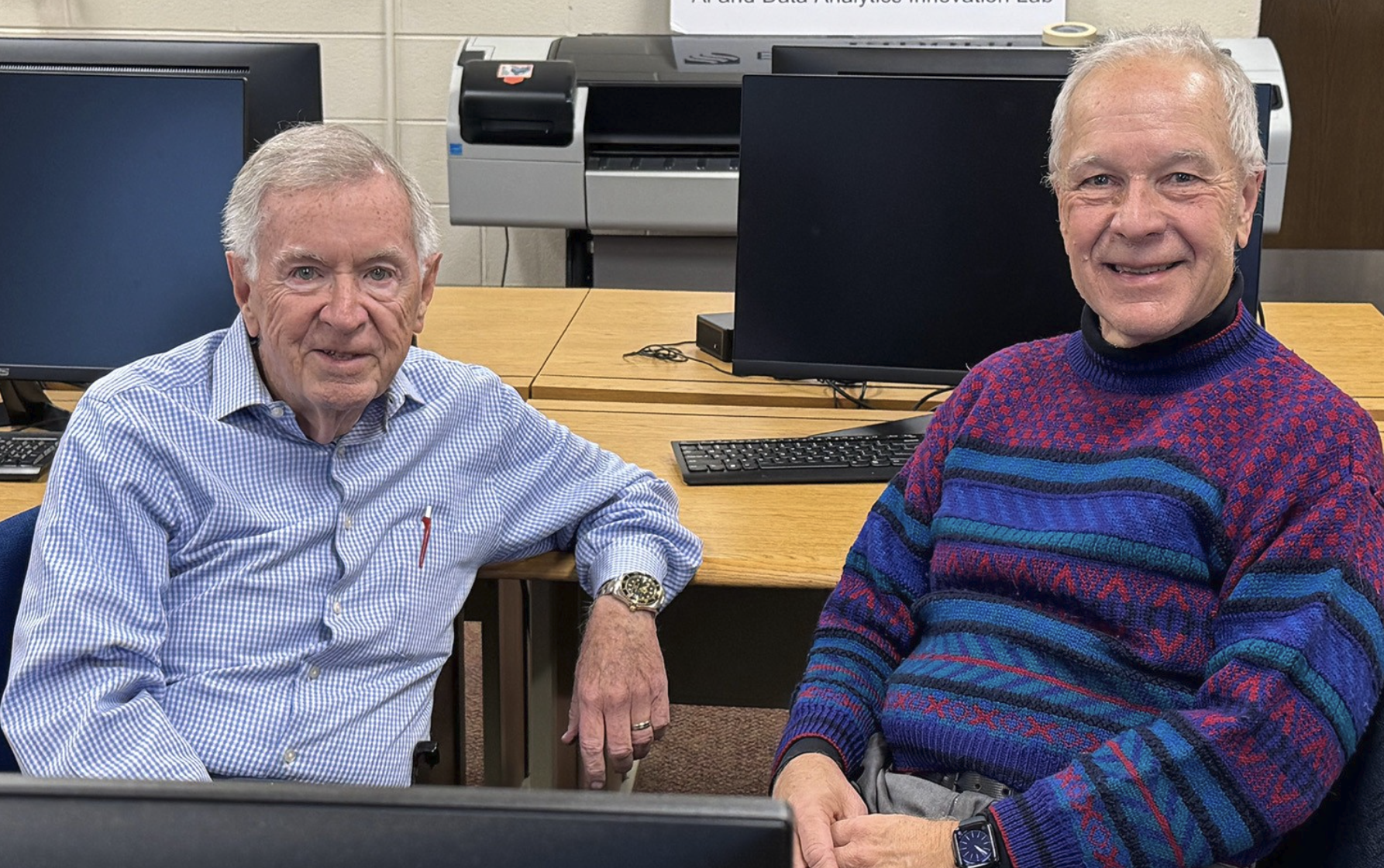
From artificial intelligence and quantum science to health research, finance, agribusiness, and business consulting, students at ACI colleges and universities are acquiring skills that will shape the future workforce of the state.
Across ACI campuses, innovation is taking shape:
Elmhurst University students and faculty partnered with American Legion Post 80 in Downers Grove to develop Post80.AI. This free digital tool helps veterans and military families navigate education-benefit and financial-aid information.
Partnering with Patrick Yanahan, Team Leader, and Dr. James Kulich, professor and chair of the Department of Computer Science & Information Systems, the project grew from the university’s AI and Advanced Analytics Innovation Lab and shows how emerging technology can be used to reduce barriers for community members.
Elmhurst’s Master of Science in Data Science and Analytics also prepares students in machine learning, predictive modeling, programming, data storytelling, AI tools, and a capstone project focused on solving a real-world challenge.
Illinois Wesleyan University: The Fisher Center for Interdisciplinary Quantum Science & Engineering gives undergraduates entry into the rapidly developing field of quantum technology. The center brings together students and faculty across physics, mathematics, computer science, and related fields for faculty-guided research, collaborative projects, internships, visiting speakers, and industry connections. By creating an undergraduate-centered pathway into quantum science, Illinois Wesleyan is helping students prepare for an emerging technology sector that will require both specialized expertise and the ability to work across disciplines.
Judson University: The new Roeser College of Business and Innovation brings undergraduate business, the MBA, sports management, undergraduate computer science, MBA in Informatics, and doctoral computer science programs into one academic structure. The model recognizes that finance, technology, analytics, entrepreneurship, and artificial intelligence increasingly intersect in the workplace. With plans for a new undergraduate finance major and a graduate finance program incorporating fintech and AI, the college is designed to help students connect business knowledge with data, technology, and real-world problem-solving.
McKendree University: A new agribusiness degree that combines agriculture, economics, business, and regional development was launched. The program responds to the importance of agriculture to Illinois’ economy and prepares students to understand the business side of food systems, farm operations, agricultural markets, and rural enterprise. By connecting business education with an industry that remains central to the state, McKendree is developing talent for employers and communities across rural and metropolitan Illinois.
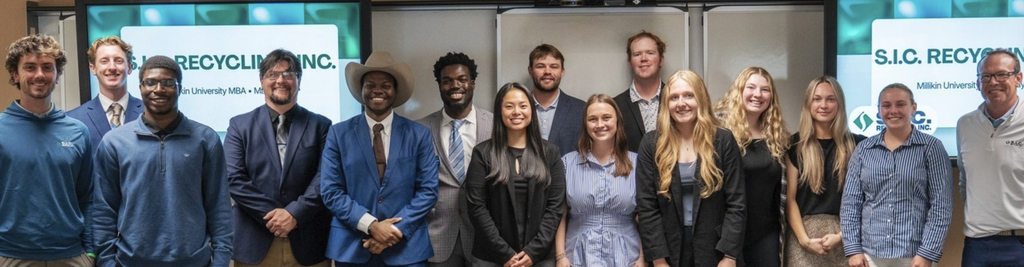
Millikin University: Through its Performance Learning model, Accelerated MBA students partnered with S.I.C. Recycling, Inc., a Riverton-based scrap-metal processor, for an eight-week consulting project. Students used AI and data analysis to identify underused sourcing markets, forecast scrap-metal market shifts, identify potential suppliers and customers, and develop recommendations for long-term strategy. The project gave students experience in client communication, research, analytics, technology use, and professional presentation while providing a regional business with actionable ideas.
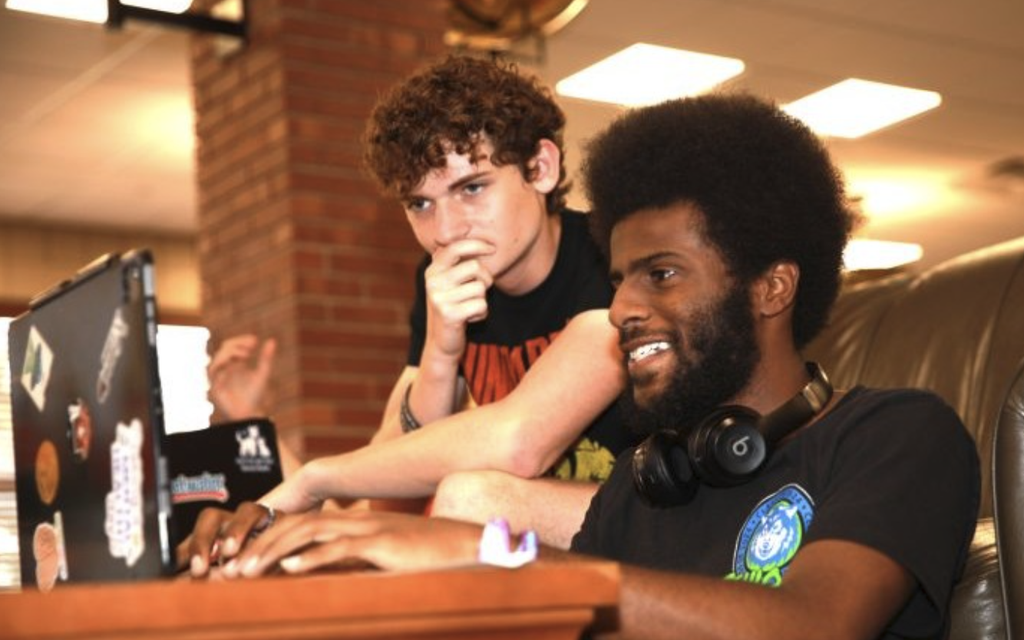
Monmouth College: New computer science concentrations in applied AI, cybersecurity, and web development give students multiple routes into technology- focused careers. All computer science students complete a senior project, which may include software development, database applications, multimedia, mobile applications, digital signal processing, or computer-aided instruction.
The programs at these ACI institutions are distinct, but they share an important goal: helping students apply knowledge in ways that benefit others. Innovation happens here because Illinois students are not waiting until after graduation to engage with the future. At ACI member schools, they are already building it!